
A New Approach to Preventing Sexual Assault on College Campuses
Why do campus sexual assaults happen? What should be done to prevent them? In their new book, Sexual Citizens (W. W. Norton & Company, Jan. 14, 2020), Columbia professors Jennifer Hirsch and Shamus Khan attempt to address these questions and offer a fresh way of thinking about this seemingly intractable problem.
President Bollinger Interviews the Authors
In this conversation with President Lee C. Bollinger, Hirsch, Professor of Sociomedical Sciences at the Mailman School of…

Researchers Found What Consent Looks Like Isn't Always Straightforward on College Campuses
“Let's be real: You're here so you want this.”
BY JENNIFER S. HIRSCH AND SHAMUS KHAN
Consent in college is a big topic. Much time has been spent on what consent looks like, who is and isn't getting it, and what happens when it's ignored. But no matter how many lessons young people get about consent during their first week of college, the ways in which they actually practice it can drastically differ from the ideal. In Sexual Citizens: A Landmark Study of Sex, Power, and Assault…
The National Academy of Medicine (NAM) today announced the election of 90 regular members and 10 international members during its annual meeting. Election to the Academy is considered one of the highest honors in the fields of health and medicine and recognizes individuals who have demonstrated outstanding professional achievement and commitment to service.
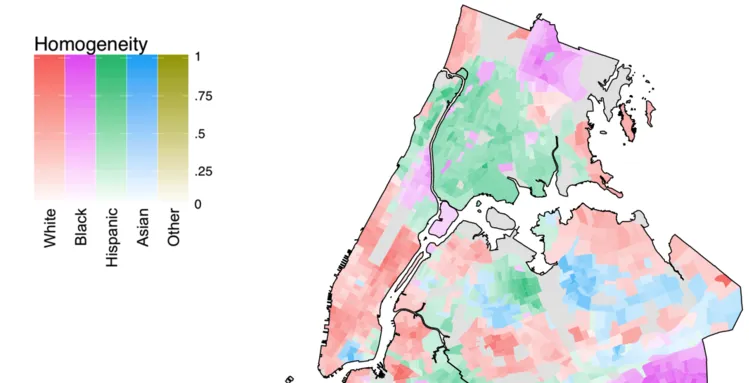
Trust, Cooperation, and Collective Action in Diverse Communities
This project will investigate how people view and respond to racial/ethnic diversity in their communities. An underlying premise is that people may respond to diversity differently depending on the specific racial/ethnic groups that make up that diversity. The first part of the project will examine how people from different racial/ethnic backgrounds define diversity, followed by distinguishing heterogeneity from the share of non-Whites in a community. The second part asks whether and how people learn from past cross-racial interactions…
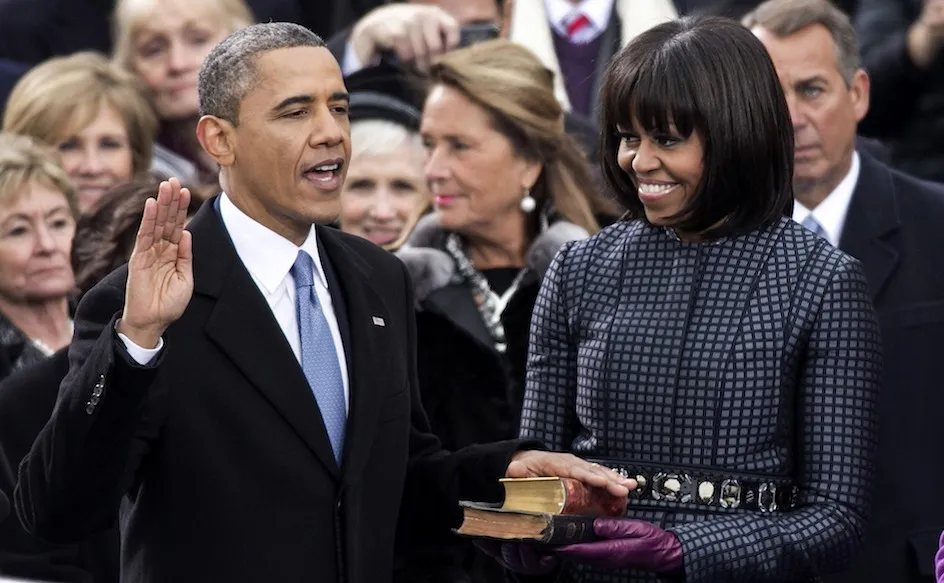
Columbia University and the Obama Foundation are pleased to announce that the Columbia Center for Oral History Research has been selected to produce the official oral history of the presidency of Barack Obama (CC '83). This project will provide a comprehensive, enduring record of the decisions, actions, and effects of his historic terms in office. The University of Hawaiʻi and the University of Chicago will partner with Columbia in this project. The University of Hawaiʻi will focus on President Obama’s early life, and the University of Chicago will concentrate on the Obamas’…
A collaborative project of sociology MA students, Dispatches from the Field is a series of chapbooks designed to engage readers directly with qualitative research data. This year’s edition includes a series of reflections that refer to the American Dream, or rather, a set of differing American Dreams and their elusive promises.

The aim of this lecture (and the edited volume from which it springs) is to show what Gulf cities can substantively teach: how world places connect to one another through new patterns of real estate investment, design, and human migration.
Please join colleagues and friends of Prof. Priscilla P. Ferguson to celebrate her life and scholarship.
Hosted by the NYU Department of Nutrition and Food Studies
Multimedia artist Umberto Crenca is the founding artistic director of AS220, a nonprofit arts organization that serves as a national model for arts and culture-based community building and urban renewal. Crenca will provide an overview of the success and relevance of AS220 and will discuss his “compost theory” of arts and culture: a means to an end or a means to a means? This theory is about creating nurturing environments that create opportunities where anyone can realize their full creative potential without trying to predict outcomes.
In their recenlty published ASR article, School-to-Work Linkages, Education Mismatches, and Labor Market Outcomes, Prof. DiPrete, Christina Ciocca, and co-authors Thijs Bol and Herman G. van de Werfhorst, find that workers have higher earnings when they are in occupations that match their educational level and field of study, but the size of this earnings boost depends on the clarity and strength of the pathway between their educational credential and the labor market.
Prof. Shamus Khan writes that kids from rich families — not just famous ones — have all sorts of advantages in applying to school in this Washignton Post op-ed, The college admissions game is rigged. Arresting cheaters won’t change that.